
Beyond the Chosen One: Why Wyldheart Ancestries and Backgrounds Redefine RPG Identity
Discover how Wyldheart ancestries and deep background customization shift the focus from power-leveling to meaningful RPG roleplay in this indie co-op title.
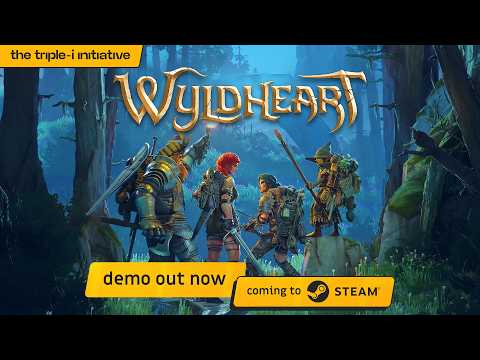 Official Demo Launch TrailerDiscover how Wyldheart ancestries and deep background customization shift the focus from power-leveling to meaningful RPG roleplay in this indie co-op title.YouTube
 The modern RPG landscape is often dominated by "chosen one" narratives, where players are thrust into the role of a messianic hero destined to save the world within the first ten minutes of gameplay. In an era of such high-stakes power fantasies, wyldheart ancestries offer a refreshing change of pace by grounding the player in a gritty, realistic setting. By focusing on your character's roots rather than a pre-destined prophecy, the game forces you to build your own story from the mud up. Understanding how these wyldheart ancestries function is the first step toward surviving the fallen kingdom of Caerwyn and finding your place in a world that doesn't care if you succeed or fail.
The Shift from Power Fantasy to Grounded Roleplay
For years, the MMORPG and large-scale action RPG genres have prioritized systems over soul. Players are often inundated with complex skill trees, gear optimization, and endless progression loops, yet they frequently feel like a cog in a machine. The industry has become incredibly efficient at creating "content," but it has often lost the art of creating "characters."
Wyldheart, the debut title from Wayfinder Studios, actively rejects the "chosen one" trope. Instead of beginning as a legendary warrior, you start as a nobody tossed into a dungeon, tasked with basic survival. This design philosophy permeates every aspect of the game, particularly in how character creation is handled.
The following table highlights the stark contrast between traditional RPG design and the philosophy found in Wyldheart.
| Feature | Traditional RPG Approach | Wyldheart Philosophy |
|---|---|---|
| Character Role | The Prophesized Hero | A humble survivor/nobody |
| Progression Focus | Endless power scaling | Survival and local stakes |
| Identity | Defined by class/combat | Defined by background/ancestry |
| World Interaction | Quest markers & checklists | Curiosity & environmental cues |
| Story Stakes | Saving the world/universe | Protecting your town/local community |
Deep Dive into Wyldheart Ancestries
When you initiate character creation, the system does not ask you to choose a "hero class" immediately. Instead, it asks you to define who you were before the adventure began. The wyldheart ancestries serve as the foundation of your identity, while the nineteen available backgrounds provide the texture and context that make your character feel like a living, breathing part of the world.
While other games treat character creation as a purely cosmetic process—focusing on sliders for facial features or body proportions—Wyldheart uses these choices to inform your starting position, your dialogue options, and your perspective on the world of Caerwyn.
The Synergy Between Ancestry and Background
It is important to understand that your choice of ancestry is only half the equation. The backgrounds are where the real roleplaying depth emerges. Whether you choose to be a Gong Farmer, a Rat Catcher, or an Exiled Noble, your background dictates your starting gear and your initial survival challenges.
For example, a player choosing the Drunk background starts with a broken bottle, whereas a Baker might begin their journey with a rolling pin. These aren't just quirky flavor text options; they are deliberate tonal statements about your status in the world.
The table below illustrates how these choices influence your initial gameplay experience:
| Background Choice | Starting Equipment | Initial Gameplay Bias |
|---|---|---|
| Gong Farmer | Basic cleaning tools | Stealth/Survival focus |
| The Drunk | Broken bottle | Unpredictable melee |
| Rat Catcher | Simple traps | Utility/Resourcefulness |
| Exiled Noble | Heirloom gear | Social/Diplomatic leanings |
| Tinkerer | Basic craft kit | Gear optimization bias |
By selecting from the various wyldheart ancestries and coupling them with these distinct backgrounds, you are not just selecting a "build." You are selecting a life story. This distinction is vital because, as community reports suggest, players who lean into their background choices find the early-game survival challenges far more engaging than those who try to "optimize" their way through the character creator.
Gameplay Mechanics: The "Nobody" Experience
The "nobody" philosophy extends far beyond character creation. Once you enter the game world, the mechanics reinforce your vulnerability. Unlike many action RPGs that allow you to sprint through dungeons with reckless abandon, Wyldheart demands caution.
Survival and Resource Management
The game introduces a "Hope" resource—a finite pool that drains when you travel at night or get knocked out. This adds a tangible layer of tension. If your Hope reaches zero, it is game over. This mechanic forces players to value their life and the lives of their companions, shifting the focus from "how fast can I clear this room" to "how do we survive this encounter."
Furthermore, the game features a noise mechanic. Kicking down a door or running loudly will alert nearby enemies, potentially leading to reinforcements. This encourages players to think tactically, utilizing the environment rather than relying solely on high-level combat skills.
The Role of Curiosity
The world of Caerwyn is designed to reward the curious. According to official developer insights, the game features handcrafted towns, NPCs with daily schedules, and secrets hidden away in corners that are not marked on your map.
If you are accustomed to games where quest markers dictate your every move, this will be a significant adjustment. In Wyldheart, you might discover a quest by eavesdropping on villagers or exploring a ruin that looked interesting from a distance. The game trusts you to pay attention, treating the world as a place to be inhabited rather than a stage for player validation.
Why Co-op is the Core Experience
While it is possible to play the game solo, early community reports indicate that the "intended" way to play is with a group of up to four players. The design philosophy is built for shared chaos, not solitary competence.
When you play alone, the game is a tense, difficult survival experience. When you play with friends, that same difficulty becomes a source of comedy and cooperative problem-solving.
Consider the following breakdown of the co-op dynamic:
| Scenario | Solo Experience | Co-op Experience |
|---|---|---|
| Dungeon Crawling | High tension; requires stealth | Shared chaos; tactical roles |
| Combat | High risk of being overwhelmed | Complementary skill usage |
| Resource Management | Strict survival focus | Shared hope/resource pooling |
| Questing | Investigative/Slow-paced | Collaborative discovery |
The synergy between wyldheart ancestries becomes even more apparent in a group setting. When one player is the "Tinkerer" and another is the "Gong Farmer," the party naturally adopts roles based on their backgrounds rather than strict class archetypes. This organic team composition is what makes the co-op experience feel so distinct from the rigid "tank, healer, DPS" holy trinity found in traditional MMOs.
The Importance of Grounded Beginnings
The success of a game like Wyldheart lies in its ability to make the player care about their character before they worry about their power level. In many modern titles, the first 30 minutes are purely for system onboarding—teaching you buttons, menus, and currencies. Wyldheart, however, uses that time to establish context.
By the time you leave the first dungeon, you aren't just a level-one avatar. You are a person who has survived a dungeon with your friends. You have a history, however brief, and a reason to be in Caerwyn. This emotional attachment is the "secret sauce" that many high-budget MMOs have quietly lost over the years.
When every player is a "chosen one," the world feels like a theme park built for your amusement. When every player is a nobody trying to survive, the world feels vast, dangerous, and worth exploring. This shift in perspective is what makes exploring the various wyldheart ancestries so compelling—it is an invitation to inhabit a role, not just a stat sheet.
Frequently Asked Questions
1. Does the choice of Wyldheart ancestries affect my combat abilities?
While your background (like Tinkerer or Gong Farmer) heavily influences your starting gear and survival utility, your ancestry provides the base identity and potential roleplay hooks. The combat itself is built around skill trees for specific weapons (sword, axe, mace, bow, staff), allowing you to customize your fighting style regardless of your initial background choice.
2. Can I change my background after starting the game?
Based on the current design philosophy, your background is a foundational part of your character's history. While you can evolve your character through skill trees and gear, the background you select at creation is intended to provide a specific starting context and narrative flavor, so choose one that fits the character story you want to tell.
3. Is Wyldheart an MMO?
No, Wyldheart is explicitly designed as a co-op action RPG for small communities. It focuses on short, impactful campaigns and drop-in co-op for up to four players, rather than the massive, persistent, and often impersonal scale of an MMORPG.
4. How do Wyldheart ancestries impact the "chosen one" narrative?
They actively work against it. By providing diverse, humble backgrounds, the game reinforces the idea that you are not special. You are a person in a world that existed before you and will continue after you, which makes your ultimate survival and growth feel earned rather than prophesied.
Related guides
Mastering Wyldheart Character Creation: A Guide to Building Your Hero
Dive into the deep customization of Wyldheart character creation. Learn how to choose your ancestry, background, and skills to conquer the kingdom of Carowyn.
Meet the Wyldheart Grimhorn: A Deep Dive Into This Ogre-Inspired RPG Character Race
Explore the Wyldheart Grimhorn, a powerful, Ogre-like race in the upcoming co-op RPG Wyldheart. Learn how this character fits into your next adventure.
Understanding the Wyldheart Mossling: A Guide to This Unique Ancestry
Dive into the Wyldheart Mossling ancestry. Learn how this character type fits into your co-op RPG adventures in Wayfinder Studios' latest title.
Unlock the Wyldheart Stonefolk: Complete Guide to the Newest Ancestry
Discover the Wyldheart Stonefolk! Learn how this new ancestry fits into the co-op action RPG, character builds, and gameplay tips for your next session.